Hello, everyone. This is “Pudding🍮” from the Business Development Department.
In this post, I’d like to tell you about the major redesign of “DandelionsJapan,” the overseas e-commerce site operated by our company.
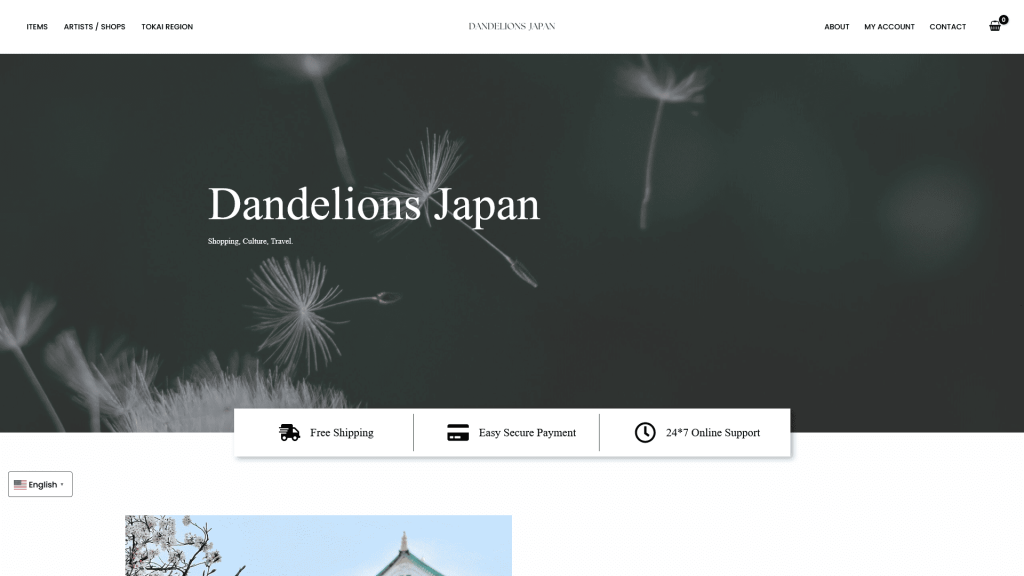
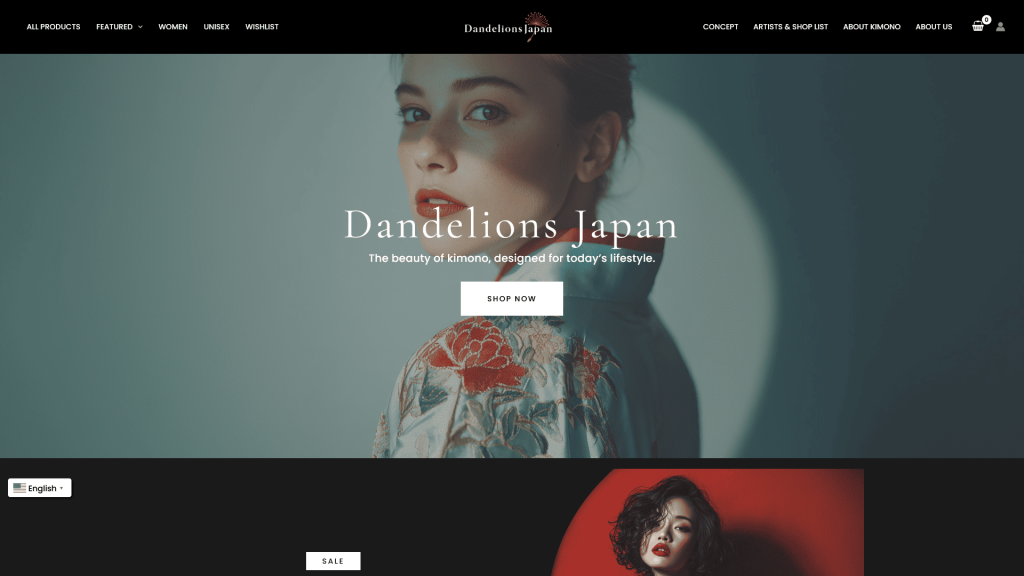
DandelionsJapan underwent a major website redesign this past March!
In this post, I’d like to share—from my perspective as someone involved in the project—why we decided to redesign the site, what aspects we focused on during the redesign, and what changes we’ve seen since the launch.
What exactly is a “cross-border e-commerce site”?
First of all, do you know what a “cross-border e-commerce site” is?
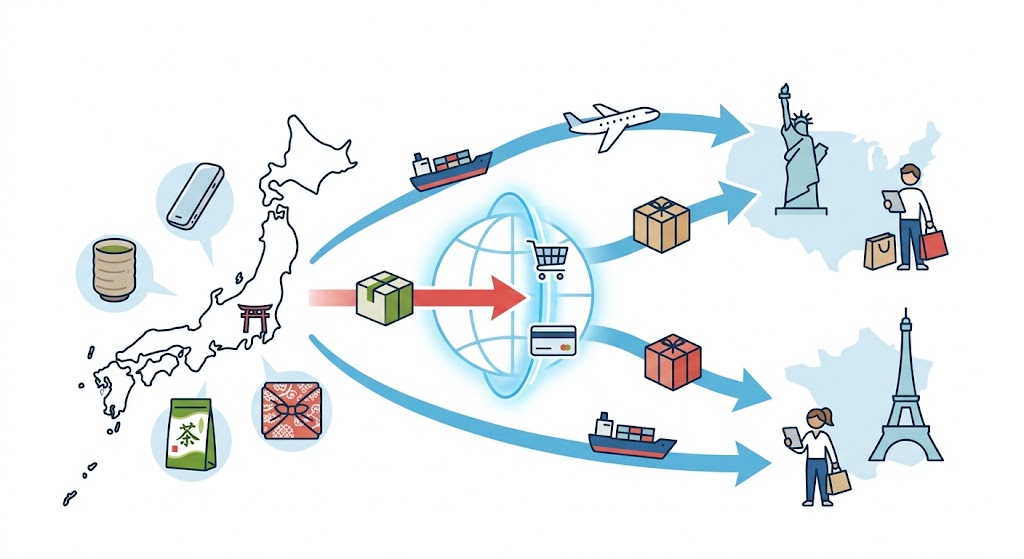
Simply put, a cross-border e-commerce site is an online store that sells products to people overseas, across national borders.
With the goal of bringing Japan’s attractive products to customers overseas, we have been selling a variety of Japanese products to customers in the United States, France, and other countries.
I believe that one of the unique appeals of cross-border e-commerce is that it allows customers not only in Japan but also overseas to discover Japanese products and actually get their hands on them.
Why Did We Redesign DandelionsJapan?
Originally, DandelionsJapan was planned and operated with a focus on “stylish designs that would appeal to international customers.”
Our goal was not only to encourage international customers to purchase Japanese products—particularly those from the Tokai region and the Nagoya area—but also to spark their interest in Japan itself, inspiring them to think, “I’d like to actually visit Japan.”
However, as we continued to operate the business, several challenges became apparent.
One of the biggest issues was that it wasn’t clear who the site was intended for or what it was meant to convey.
Because the site’s design didn’t quite match the price range of the products, and the range of product categories had expanded, it became unclear what exactly customers could buy at DandelionsJapan.
If the target audience remains undefined, it becomes difficult to decide on the site’s design, create product photos and descriptions, or promote the site through ads and social media.
“Who do we want to reach with this product?”
“What impression do you want visitors to this site to have?”
“What are the items you can only buy at DandelionsJapan?”
We needed to take another look at these aspects.
So, for this redesign, we decided not only to update the site’s appearance but also to reevaluate the site’s overall direction.
We want more international customers to fall in love with Japan.
We want them to learn more about Japanese culture.
And we want them to experience more Japanese products.
With these goals in mind, we’ve completely revamped DandelionsJapan.
Specific Details of the Redesign
From here on, we’ll provide a detailed overview of exactly which parts of the site we’ve updated and how, specifically for our international customers.
◆Point A: “A Modern, Stylish Design”
The first major change we made was to the overall design of the site.
With this redesign, we’ve defined our target audience more clearly.
We have defined our target audience as:
・People who are interested in Japan, love Japan, or love Japanese products
・Women in their 30s and 40s
・Targeted at the U.S. and Western markets
We have identified the following as the main products we want to sell:
・Kimonos
・Remade kimono items
・Fashion items that can be worn with kimonos
・Traditional Japanese crafts
and so on.
On the previous site, the concept was a bit vague, making it difficult to achieve a consistent look across product types and designs.
So this time, after clearly defining our target audience and the products we wanted to sell, we updated the design to emphasize “modern,” “elegant,” and “mature” aesthetics.
When deciding on the design, we didn’t jump straight into production; instead, we first conducted market research.
We searched for e-commerce sites that, like us, sell kimonos and other traditional Japanese products to international customers,
and investigated questions such as:
“What kinds of designs are being used?”
“What kinds of products are being sold?”
“What features are available?”
While drawing inspiration from other sites, we didn’t simply copy them; instead, we created our design while carefully considering how to bring out the unique character of DandelionsJapan.
We’ve also made improvements to the product photos.
Previously, we allowed up to four photos per product, but following the redesign, we’ve increased that limit to a maximum of eight photos per product.
For international customers, product photos are extremely important on e-commerce sites where they cannot see the actual items in person.
We’ve made sure to provide as much information as possible—not just front-view photos, but also details of the design, the texture of the fabric, the back of the item, and photos from different angles—so customers can get a comprehensive view.
This allows customers to learn more about the products in detail before making a purchase.
◆Point B: “Convenient Feature Design”
Next, we focused on features designed to ensure users can navigate the site comfortably.
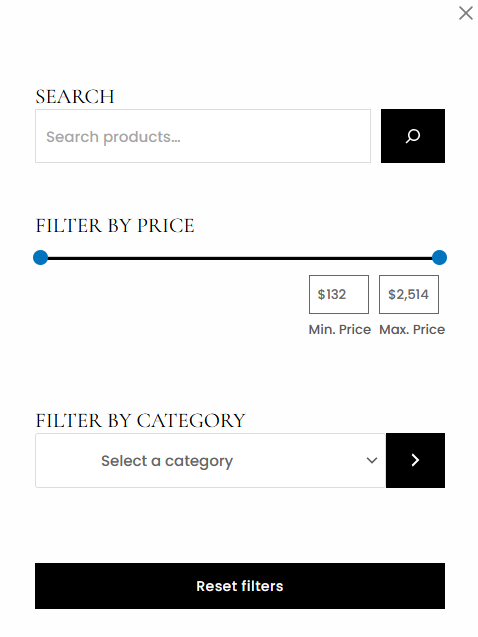
As part of this redesign, we added a “Back to Top” button, product filtering options, and a “Favorites” feature.
One particular challenge was that, as the number of products increased, it became harder to find the specific product customers were looking for.
No matter how appealing the products are, if it takes too long for users to find them, the site will be difficult to use.
Therefore, we’ve revised our product categories and added filter functions to make it easier to find products.
In addition to text-based searches (such as by product name), users can now narrow down their search results based on criteria such as store and price.
“I want to find products made with kimono fabric.”
“I’m looking for something in this price range.”
We’ve made it possible for users to smoothly find the products they need based on their specific goals.
We’ve also added a feature that lets you save items you’re interested in to your favorites.
On e-commerce sites, there are times when you might think, “I’m not ready to buy this right now, but I’d like to look at it again later.”
By using the favorites feature, you can save items that catch your eye so you can compare them later or consider purchasing them.
We aimed to create a website where users can easily find products and discover items that catch their interest by minimizing any aspects that might make the site feel “difficult to use.”
◆Point C: “Enhancing a Sense of Security”
Another major improvement we’ve made is organizing information to help users feel confident about their purchases.
When purchasing products from overseas e-commerce sites, some people may feel even more anxious than they do with domestic Japanese sites, wondering, “Is it really safe to buy from here?”
In particular, when purchasing Japanese products from overseas, customers need not only product information but also details on the purchasing process, terms of service, frequently asked questions, and other relevant information.
Therefore, as part of this redesign, we’ve organized information such as our USP (Unique Selling Proposition), FAQs, and terms of service, and we’ve upgraded the contact form to make it more user-friendly.
We believe it’s important not just to display and sell products, but also to make customers feel that they can shop with confidence on this site.
What changes have there been since the redesign?
Since we underwent a major redesign, we’ve been seeing gradual changes on the site.
Currently, the number of registered users and page views is gradually increasing.
In addition, while we previously had many users from Asia, since the site redesign, we’ve seen an increase in visits from users in the United States—the market we’ve targeted this time.
I think this may be a sign that the targets and direction we set for the site during this redesign are gradually starting to yield results.
Of course, there are still plenty of areas that need improvement.
In particular, the major challenge we face right now is how to bridge the gap between getting people to visit the site and actually purchasing products.
Even if the number of visitors to the site increases, an e-commerce site cannot be considered successful unless customers actually make purchases.
Therefore, moving forward, I feel it’s necessary not only to focus on website development but also to learn more about marketing,
and to consider questions such as:
“Why do customers buy this product?”
“What kind of information leads to a purchase?”
“What do international customers look for in Japanese products?”
I feel it’s essential to give these aspects careful consideration.
Summary
This redesign marked a major turning point for DandelionsJapan.
Not only did we update the site’s design, but by rethinking our core question—“Who are we trying to reach, and what do we want to convey?”—we’ve made the site’s direction much clearer than before.
Moving forward, we plan to continue improving the site to make it more user-friendly and appealing, while taking user feedback and traffic data into account.
Ultimately, we aim to make DandelionsJapan a platform that introduces international customers to the charm of Japanese culture and products, inspiring them to think, “I want to learn more about Japanese products” and “I want to visit Japan.”
That’s all for this post.
Thank you for reading this far!
Stay tuned for the next blog post!