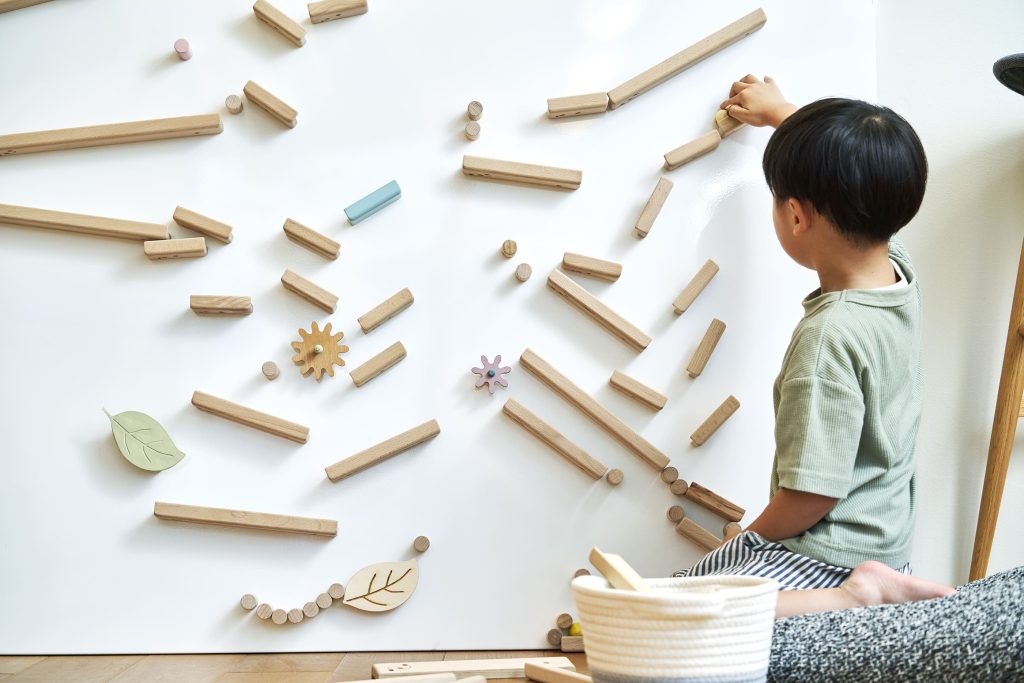
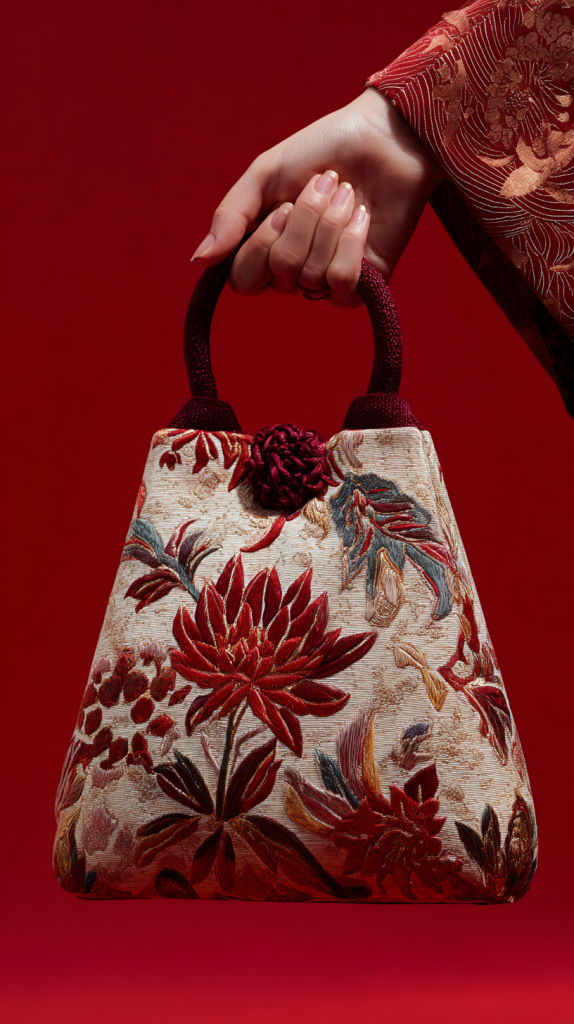
In this post, I’d like to introduce a wonderful item that’s sure to bring a smile to the whole family. It’s a wooden toy that will make you exclaim, “This is amazing!”—the “Yutori Toys Cukor,” crafted by Koeda Works in Aichi Prefecture.
These wonderful toys allow children to experience the bounty of Japan’s forests and the craftsmanship of local artisans while relieving the “stress of tidying up” that comes with raising children. We’ll be sharing the appeal of these toys in a two-part series—Part 1 and Part 2!
A Magical Toy That Helps You Say “Clean Up!” Less Often
The daily back-and-forth: “Hurry up and put your toys away!” On one side are moms and dads who want to keep the room tidy; on the other, children who want to keep playing to their hearts’ content. The “Yutori Toys Kukkor,” a wooden toy designed to be played with on the wall, was created to accommodate both of these perspectives and bring a sense of “leisure” back into the home.
“The Warmth of Wood” Born from Japan’s Forests and Handcrafted Artistry
Domestic Hardwood from the Forests of Hida Kukkoru’s rails are made from domestic hardwood (beech, maple, cherry, etc.) grown in the lush forests of the Hida region in Gifu Prefecture. This hard and durable hardwood features unique grain patterns and textures depending on the species, allowing you to enjoy a rich variety of visual appeal. This solid wood, left in its natural state, is safe even for small children and has been selected as a “Gifu Prefecture Certified Recycled Product,” recognizing its effective use of local forest resources.
Invisible and Untouchable! Thorough Safety Design The embedded powerful magnets are covered with ultra-thin sheets of natural wood to prevent accidental ingestion or detachment. Additionally, the stopper magnets on the underside are designed to prevent the product from slipping off the track, and it meets Japan’s public safety standards.
“Fun Interior Pieces” That Blend Seamlessly Into Your Room A simple design that highlights the natural texture of solid wood. It can also be used as a wall rack to display photos and postcards with magnets, adding a touch of color to your living room.
Summary
Born from Japan’s lush forests and traditional craftsmanship, “Kukkoru” is a product that won the “Wood Design Award 2020.” In the upcoming [Part 2], we’ll introduce its benefits as an educational toy and our collaboration with “Kuppy Ramune”!
That concludes this post. Stay tuned for our next blog post!
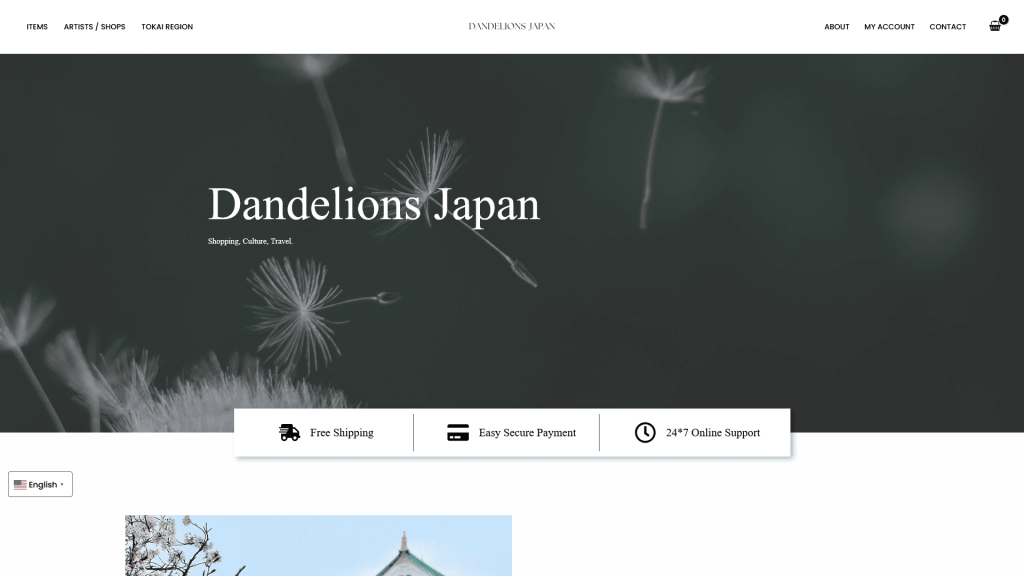
Hello, everyone. This is “Pudding🍮” from the Business Development Department. In this post, I’d like to tell you about the major redesign of “DandelionsJapan,” the overseas e-commerce site operated by our company. DandelionsJapan underwent a major website redesign this past March! In this post, I’d like to share—from my perspective as someone involved in the project—why we decided to redesign the site, what aspects we focused on during the redesign, and what changes we’ve seen since the launch.
What exactly is a “cross-border e-commerce site”?
First of all, do you know what a “cross-border e-commerce site” is? Simply put, a cross-border e-commerce site is an online store that sells products to people overseas, across national borders. With the goal of bringing Japan’s attractive products to customers overseas, we have been selling a variety of Japanese products to customers in the United States, France, and other countries. I believe that one of the unique appeals of cross-border e-commerce is that it allows customers not only in Japan but also overseas to discover Japanese products and actually get their hands on them.
Why Did We Redesign DandelionsJapan?
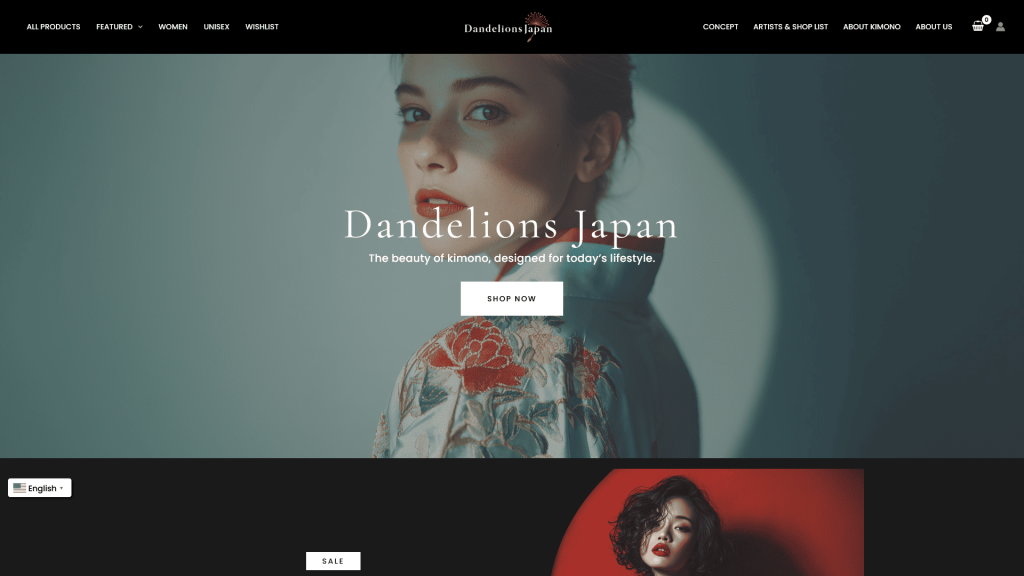
Originally, DandelionsJapan was planned and operated with a focus on “stylish designs that would appeal to international customers.” Our goal was not only to encourage international customers to purchase Japanese products—particularly those from the Tokai region and the Nagoya area—but also to spark their interest in Japan itself, inspiring them to think, “I’d like to actually visit Japan.” However, as we continued to operate the business, several challenges became apparent. One of the biggest issues was that it wasn’t clear who the site was intended for or what it was meant to convey. Because the site’s design didn’t quite match the price range of the products, and the range of product categories had expanded, it became unclear what exactly customers could buy at DandelionsJapan. If the target audience remains undefined, it becomes difficult to decide on the site’s design, create product photos and descriptions, or promote the site through ads and social media. “Who do we want to reach with this product?” “What impression do you want visitors to this site to have?” “What are the items you can only buy at DandelionsJapan?” We needed to take another look at these aspects. So, for this redesign, we decided not only to update the site’s appearance but also to reevaluate the site’s overall direction. We want more international customers to fall in love with Japan. We want them to learn more about Japanese culture. And we want them to experience more Japanese products. With these goals in mind, we’ve completely revamped DandelionsJapan.
beforeafter
Specific Details of the Redesign
From here on, we’ll provide a detailed overview of exactly which parts of the site we’ve updated and how, specifically for our international customers.
◆Point A: “A Modern, Stylish Design”
The first major change we made was to the overall design of the site. With this redesign, we’ve defined our target audience more clearly.
We have defined our target audience as: ・People who are interested in Japan, love Japan, or love Japanese products ・Women in their 30s and 40s ・Targeted at the U.S. and Western markets
We have identified the following as the main products we want to sell: ・Kimonos ・Remade kimono items ・Fashion items that can be worn with kimonos ・Traditional Japanese crafts and so on.
On the previous site, the concept was a bit vague, making it difficult to achieve a consistent look across product types and designs. So this time, after clearly defining our target audience and the products we wanted to sell, we updated the design to emphasize “modern,” “elegant,” and “mature” aesthetics. When deciding on the design, we didn’t jump straight into production; instead, we first conducted market research. We searched for e-commerce sites that, like us, sell kimonos and other traditional Japanese products to international customers, and investigated questions such as: “What kinds of designs are being used?” “What kinds of products are being sold?” “What features are available?” While drawing inspiration from other sites, we didn’t simply copy them; instead, we created our design while carefully considering how to bring out the unique character of DandelionsJapan.
We’ve also made improvements to the product photos. Previously, we allowed up to four photos per product, but following the redesign, we’ve increased that limit to a maximum of eight photos per product. For international customers, product photos are extremely important on e-commerce sites where they cannot see the actual items in person. We’ve made sure to provide as much information as possible—not just front-view photos, but also details of the design, the texture of the fabric, the back of the item, and photos from different angles—so customers can get a comprehensive view. This allows customers to learn more about the products in detail before making a purchase.
◆Point B: “Convenient Feature Design”
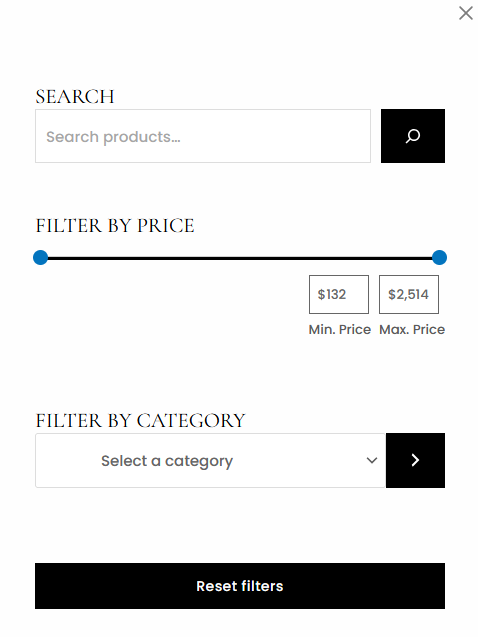
Next, we focused on features designed to ensure users can navigate the site comfortably. As part of this redesign, we added a “Back to Top” button, product filtering options, and a “Favorites” feature. One particular challenge was that, as the number of products increased, it became harder to find the specific product customers were looking for. No matter how appealing the products are, if it takes too long for users to find them, the site will be difficult to use. Therefore, we’ve revised our product categories and added filter functions to make it easier to find products. In addition to text-based searches (such as by product name), users can now narrow down their search results based on criteria such as store and price. “I want to find products made with kimono fabric.” “I’m looking for something in this price range.” We’ve made it possible for users to smoothly find the products they need based on their specific goals.
We’ve also added a feature that lets you save items you’re interested in to your favorites. On e-commerce sites, there are times when you might think, “I’m not ready to buy this right now, but I’d like to look at it again later.” By using the favorites feature, you can save items that catch your eye so you can compare them later or consider purchasing them.
We aimed to create a website where users can easily find products and discover items that catch their interest by minimizing any aspects that might make the site feel “difficult to use.”
◆Point C: “Enhancing a Sense of Security”
Another major improvement we’ve made is organizing information to help users feel confident about their purchases. When purchasing products from overseas e-commerce sites, some people may feel even more anxious than they do with domestic Japanese sites, wondering, “Is it really safe to buy from here?” In particular, when purchasing Japanese products from overseas, customers need not only product information but also details on the purchasing process, terms of service, frequently asked questions, and other relevant information. Therefore, as part of this redesign, we’ve organized information such as our USP (Unique Selling Proposition), FAQs, and terms of service, and we’ve upgraded the contact form to make it more user-friendly. We believe it’s important not just to display and sell products, but also to make customers feel that they can shop with confidence on this site.
What changes have there been since the redesign?
Since we underwent a major redesign, we’ve been seeing gradual changes on the site. Currently, the number of registered users and page views is gradually increasing. In addition, while we previously had many users from Asia, since the site redesign, we’ve seen an increase in visits from users in the United States—the market we’ve targeted this time. I think this may be a sign that the targets and direction we set for the site during this redesign are gradually starting to yield results. Of course, there are still plenty of areas that need improvement. In particular, the major challenge we face right now is how to bridge the gap between getting people to visit the site and actually purchasing products. Even if the number of visitors to the site increases, an e-commerce site cannot be considered successful unless customers actually make purchases. Therefore, moving forward, I feel it’s necessary not only to focus on website development but also to learn more about marketing, and to consider questions such as: “Why do customers buy this product?” “What kind of information leads to a purchase?” “What do international customers look for in Japanese products?” I feel it’s essential to give these aspects careful consideration.
Summary
This redesign marked a major turning point for DandelionsJapan. Not only did we update the site’s design, but by rethinking our core question—“Who are we trying to reach, and what do we want to convey?”—we’ve made the site’s direction much clearer than before. Moving forward, we plan to continue improving the site to make it more user-friendly and appealing, while taking user feedback and traffic data into account. Ultimately, we aim to make DandelionsJapan a platform that introduces international customers to the charm of Japanese culture and products, inspiring them to think, “I want to learn more about Japanese products” and “I want to visit Japan.”
Hello, my name is Tim, and I’m in charge of content creation for the e-commerce website dandelions.net. Our mission is to bring the true soul of traditional Japanese crafts to the world, delivering quality and authenticity to our customers.
Recently, we decided to focus on kimono-related products, since the art of the kimono represents the very heart of Japanese culture and resonates deeply with foreign audiences.
Our Content Creation Process
Creating content at Dandelions follows several important steps:
Research
Developing ideas
Scriptwriting
Gathering raw materials
Editing
Publishing
To optimize this workflow, I rely heavily on modern tools—especially AI.
The Role of AI in Content Development
When it comes to brainstorming ideas and gathering raw materials, I often use AI assistants. Recently, I started producing video and photo content with MidJourney, which I find to be one of the most advanced tools for creative visual generation.
I’m also exploring Higgsfield AI, an exciting new player in the AI-driven video creation market. Unlike many existing platforms, it not only generates high-quality photo and video content but also integrates VFX effects, opening new creative possibilities.
Editing and Post-Production
For editing, I currently use Adobe Premiere Pro and Adobe After Effects—the industry leaders in video production. These programs offer the flexibility and advanced features needed to create polished, engaging content.
Why AI Matters for E-Commerce
I believe effective use of AI is becoming the new driving force in e-commerce promotion. Many brands still struggle to produce quality photo and video content for their campaigns. AI tools, however, can deliver visually compelling materials tailored to target audiences.
In today’s Japanese economy—where standing out is more important than ever—AI allows local brands to amplify their message and connect with global customers more effectively.
With rapid technological progress, I’m confident AI will play an even bigger role in future UGC (User-Generated Content) activities, and I’m committed to integrating these innovations into our efforts to promote Japanese products worldwide.
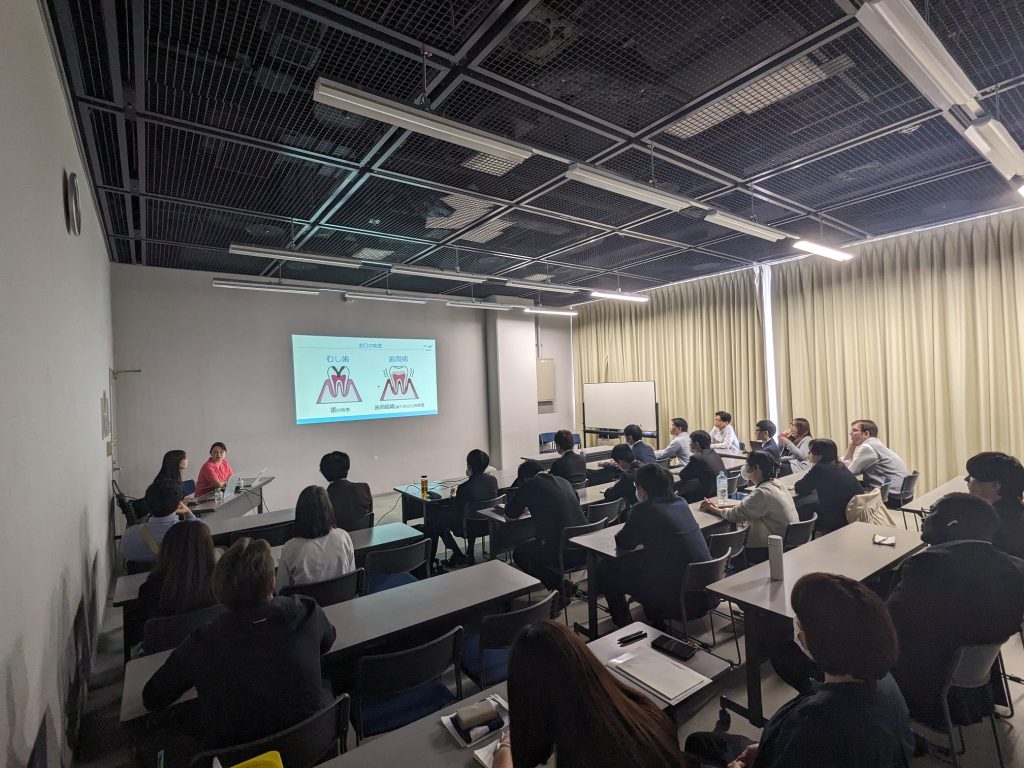
Thank you for visiting. This is Hachi from “Team 1”. Today, I’d like to share with you what happened at the Oral Care Seminarheld on Friday, March 28.
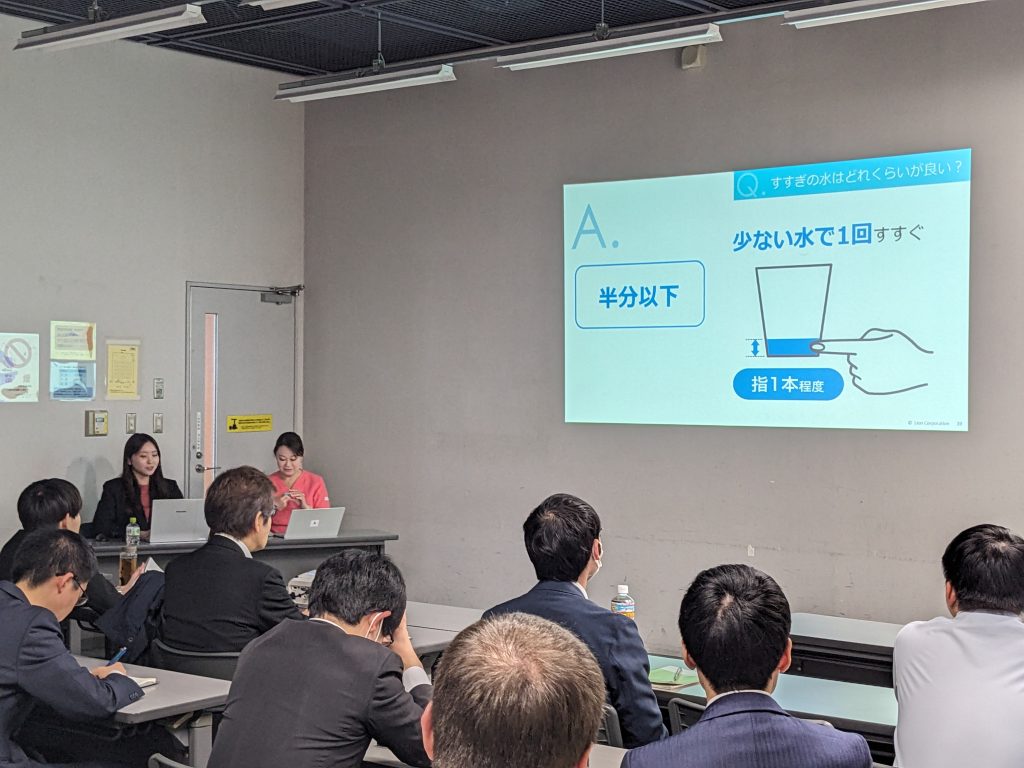
On the day of the event, Ms. Haruka Terai from Lion Corporation and dental hygienist Ms. Aya Yamada kindly provided us with a variety of explanations.
First, the results of a pre-seminar internal survey were shared. Surprisingly, only a small number of people regularly visit the dentist, and less than half of the respondents engage in oral care beyond daily tooth brushing. I was startled myself, as I hadn’t been to the dentist in quite a while either.
One particularly interesting survey result was the response to the question, “What do you wish you had done while still working?” “Dental care” ranked among the top answers. When we’re young, we tend not to think much about oral health, but the results highlighted how putting it off could lead to regrets later on.
I had heard of the slogan from the “8020 campaign,” which aims to keep 20 teeth by age 80, but recently there’s a new one: “6028.” In order to eat hard foods, you need a certain number of teeth, and once you lose them, it becomes difficult to eat those foods. The key takeaway was that maintaining your teeth is essential if you want to continue enjoying the foods you love, no matter your age.
The seminar also covered the connection between oral health and systemic diseases. Many participants were surprised to learn how closely oral conditions are linked to a wide range of overall health issues. The idea that the condition of your mouth directly affects your entire body’s health was something I hadn’t given much thought to before, and it left a strong impression on me.
In addition, we received careful guidance on how to brush teeth properly, how to choose the right toothbrush, how to use toothpaste, and how to handle oral care products. There are small tips—like how to hold the toothbrush and how much pressure to apply—that can make a difference. I was also surprised to learn that there’s an appropriate amount of fluoride toothpaste to use for maximum effectiveness. By following these key points, we can significantly improve the effectiveness of our daily tooth brushing.
At the end, they kindly answered a few questions. Some of the topics included the difference between expensive and inexpensive toothbrushes, as well as the differences between electric and manual toothbrushes. Since everyone’s oral condition is different, there’s no single “correct” toothbrush—it’s important to choose one that suits your own needs. That was an important realization for me.
After the seminar, I immediately tried out some of the recommended care products. It actually made my usual tooth brushing routine feel more enjoyable. Brushing teeth is something we do every day without much thought, but this seminar made me feel like it might be a good time to finally visit the dentist again after a long break. How about you? Why not take this opportunity to reconsider your own dental health?
In August, we held an internship program at our company, with three Japanese students and five international students participating. In this second part of the experience stories, we’ll introduce the Japanese students!
Japanese student (male) :
I participated in Dandelions Inc.’s summer internship. It was my first internship, and aside from me and two others from my school, everyone else was from overseas. I was really nervous. On the first day, we used AI to create stamps for the SNS app LINE. It was really interesting to hear so many different ideas on the impressions we got from a single illustration.
Even though it was my first time doing group work, everything went smoothly and it was a lot of fun.
On the second day, we did some test exercises. The task of carefully checking for any mistakes in the results was really tough, but it gave me a strong sense of accomplishment.
On the third day, we practiced exchanging business cards and tried out website design. During the business card exchange practice, we actually exchanged cards with employees of Dandelions Inc.
It was a valuable experience since it’s rare to have the opportunity to exchange cards with actual employees.
For the website design experience, the theme was introducing traditional crafts from the Tokai region to people overseas.
When we discussed how to spark interest in Japanese products among people overseas, we were able to hear actual opinions from international participants. This helped us notice a lot of things we normally wouldn’t, making it a really interesting and meaningful time. The internship was full of first-time experiences and allowed me to grow significantly.
Japanese student (male)
I participated in Dandelions Inc.’s internship. It was my first time joining an internship, and although I was nervous, it turned out to be a great opportunity for cultural exchange since there were many participants from different countries. The staff members who guided us were friendly, and I had a great time.
On the first day,
we kicked things off with icebreakers, starting with self-introductions where we talked about our names and where we were from. Next, we worked together to choose 10 phrases and images for creating LINE stamps. Additionally, we created personal PR materials and went out to buy snacks for a project called “LUCKY BOX,” which involved promoting Japanese snacks to an overseas audience.
Day 2
We started by tasting the snacks we bought the day before and shared our thoughts. It was refreshing to hear people compare them to snacks from their own countries, and some of their opinions were completely different from what I, as a Japanese person, had expected.
Next, we did some test exercises. The test involved something like a “spot the difference” task, which was very detailed and important work. It required a lot of concentration and was quite tiring.
Day 3
We practiced exchanging business cards, learning how to give and receive them properly, which was a valuable experience. Next, we started working on creating a website. Through gathering information and discussions, we set our direction and got to work. Even though everyone was from different countries, we were able to communicate well and bring everything together smoothly.
Japanese Studend (male)
Self-introduction Nice to meet you, I’m Nori, and I participated in the internship this August. Looking forward to working with you.
Reason for participating I thought the biggest feature of Dandelions Inc. is that they have many foreign employees, offering a global working environment. I’ve always wanted to work at an international IT company, and I was curious about what it would be like to work in a global setting as a first step, so I applied for this internship.
Internship details
On the first day, we created LINE stamps and went out to buy snacks.
on the second day, we had a tasting party and a system test experience.
On the third day, we practiced exchanging business cards and created a website using WordPress.
Post-internship thoughts It was a great opportunity to learn about the cultural differences between various countries by communicating with many international participants, including fellow interns. The biggest takeaway for me was the difference between Japanese and global perspectives. I think many Japanese, including myself, tend to be a bit reserved, while I noticed that people from other countries were much more proactive and frequently shared their opinions. I believe it’s important for companies to have a variety of options. This internship has inspired me to become someone who can view things from different angles and actively express my opinions.